

Criticism is a bitter yet crucial tonic for entry-level technical writers. If taken wisely, it helps you hone your writing skills and improve the quality of content. However, those who don’t know how to handle it properly might experience side effects like fear, anxiety, self-doubt, or a mix of these emotions.
Writers need to use specific strategies every time they face criticism to maximize its effectiveness and avoid daunting side effects. This preparedness not only proves transformative for budding writers but also boosts confidence and enthusiasm. If you are also a writer going through such a phase and want to adopt a practical approach to dealing with criticism, this post is just for you.
Strategies to Deal with Criticism
There is no universal formula for effectively handling criticism. You must evaluate the situation and apply one of the following approaches.
- Detach criticism and self-worth
- Evaluate source and intent
- Focus on “Why”
- Address both – praise and critique
- Pause and reflect
- Master critique analysis
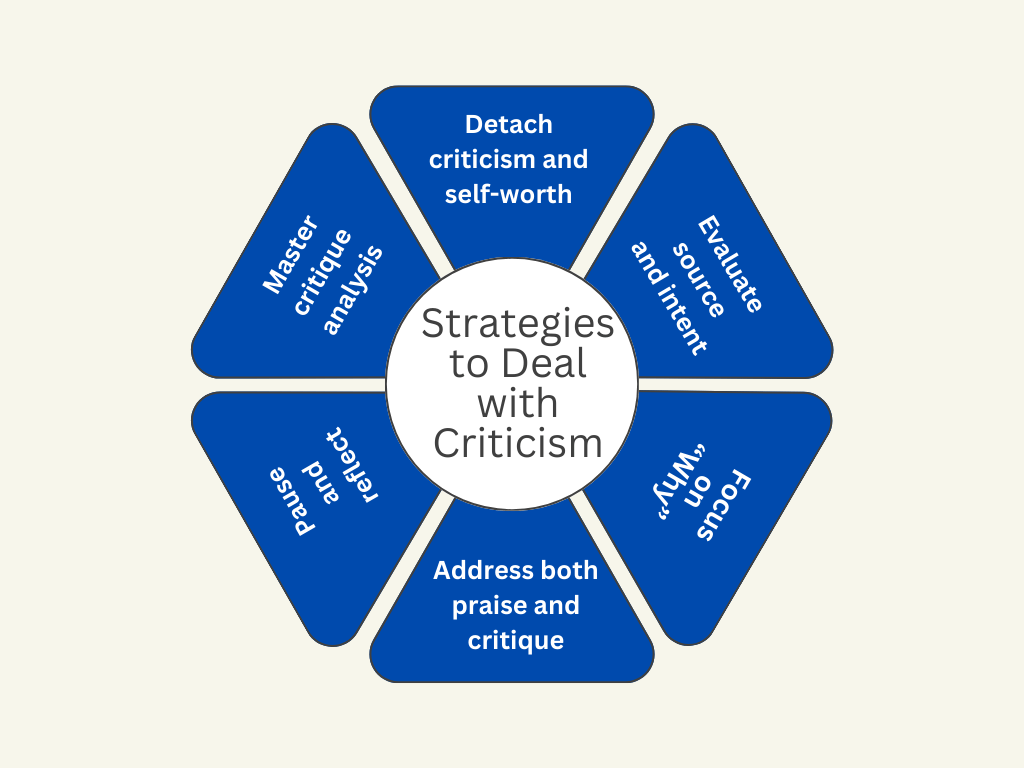
Detach criticism and self-worth
When writers face criticism, they often fall prey to self-doubt rather than analyzing the feedback objectively. Questions like “Am I a competent writer?” or “Is this work beyond my capabilities?” flood their minds. The fear surrounds their intelligence and creativity causing further obstruction in future performances.
First things first! Understand that the criticism pertains to your current task and not your inherent potential. By recognizing this fact, you can channel your energy in the right direction—to analyze criticism rationally and use it as a learning opportunity. Creating distance between you and your writing serves as a protective barrier against unwarranted negative thoughts.
Evaluate the critic’s credibility and intent
Before you let negative feedback attack your self-confidence, PAUSE! And check the credibility and intent of the critic.
In workplaces, inputs usually come from qualified seniors or editors. Their feedback, which may be constructive or harsh at times, reflects their knowledge and expertise. In general, it is a good idea to filter out the harshness and embrace actionable advice from them, recognizing it as a valuable resource for growth and development.
A similar approach applies to a peer’s criticism, too. However, you should be able to evaluate their expertise and intent and weigh their comments in the light of rational analysis.
Focus on the “Why”
Shifting your perspective from “what” to “why” when facing criticism can significantly improve how you handle it. By asking, “Why this feedback?” you delve deeper into areas for improvement. You can identify specific aspects of writing that need refinement such as tone, style, vocabulary, flow, information, etc.
The understanding from learning and practice adds up to your growing subject matter expertise and sharpens your writing skills. So, as you grow, you review your own work with a better direction in an attempt to improve the quality and alignment with stakeholders’ expectations.
Acknowledge both praise and critique
Harsh feedbacks often trigger negative thoughts but it is essential to recognize the mix of positive and negative attributes of your work. While it is important to consider errors and areas of improvement seriously, at the same time, it is worth celebrating the aspects that went through.
When critics acknowledge good visuals, font choices, understanding, or other positive elements in your writing, consider them as strengths that boost your confidence. Treat praise with the same seriousness as criticism.
Celebrating your strengths and appreciation elates you and balances the dull and anxious thoughts you may harbor about the criticism. Ultimately, this mindset prepares you to handle critiques more maturely.
Pause and reflect
Facing feedback, new writers often react defensively rather than contemplating it thoughtfully. This defensive mode may be due to disappointment about the criticism. While it may seem okay to feel upset and frustrated at first, responding to the feedback immediately is neither necessary nor useful.
Next time when you face criticism, pause or take a break and reflect before reacting. The pause act allows you to calm down and approach the feedback calmly and diligently. Then, reflection helps you analyze the “what” and “why” of the feedback, leading to a more nuanced understanding. It will also prepare your response thoughtfully and formulate clarifying questions if needed.
Develop the ability to analyze criticism
Even seasoned authors consistently face critiques. The only difference is the maturity they show to deal with it.
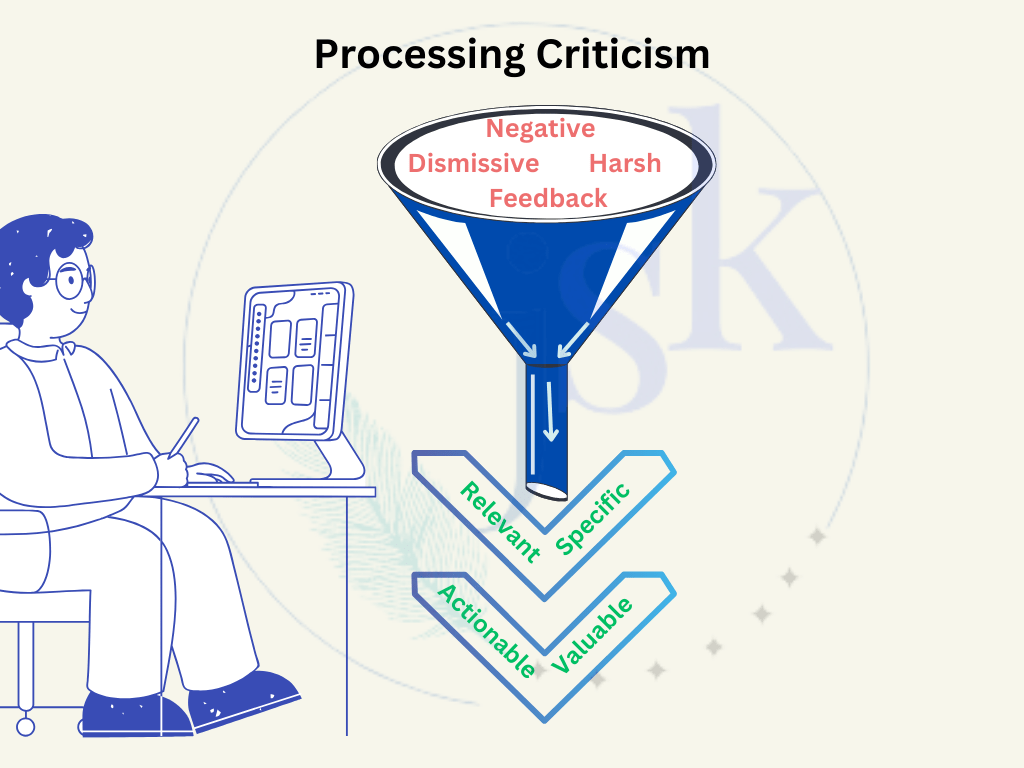
As you advance from novice to professional, your ability to handle criticism should also become more refined. Now that you know various approaches to managing criticism, actively cultivate your analytical skills and gradually prepare yourself to process feedback swiftly, accurately, and thoroughly without taking it personally.
Conclusion
Criticism is an inevitable and crucial part of the writing journey. New writers often have a tough time dealing with criticism, but with the right approach, they can transform it into a powerful tool for growth and refinement. So, apply the right strategy and convert criticism from a hurdle into a springboard.
Comment and share your experience when you faced such criticism and how did you deal with it.
Are you currently struggling to improve your technical writing skills? Share a 200 to 400-word write-up, and I will be happy to provide constructive feedback on your writing for FREE! Reach out now.


 JSK Writes
Leave a comment