

Technical writing is like a toolbox.
Just as a toolbox contains specialized tools, technical writing encompasses diverse types, each serving a purpose. These diverse writing types facilitate the transfer of technical knowledge from ideation to the final product and beyond.
Therefore, understanding these diverse types helps choose the right channel for technical communication, hone skills, and achieve specific goals of technical writing. In this blog post, we discuss different technical writing types, their format, and examples.
Technical Writing Types
Technical writing can be classified mainly into 2 categories.
- Informative Writing
Informative writings aim to educate and explain technical concepts and procedures. Examples of informative types are user manuals, SOPs, API documentation, research papers, and technical reports. - Persuasive Writing
The purpose of persuasive writing is to convince or influence a decision by describing why, what, and how about an event, problem, or solution. White papers, case studies, press releases, and business plans are some examples of the persuasive writing.

Informative Technical Writing
User Manuals
User manuals are digital or printed guides that explain how to use a product. They provide complete, accurate, and clear information for users to study and implement the knowledge to solve their problems.
User manuals play a crucial role as quick and reliable references, saving time for users. A well-crafted manual is a valuable tool that enables users to use the product correctly and independently. It not only enhances their user experience but also ensures effective knowledge transfer.
A user manual usually consists of the following components:
- Introduction
- Components
- Quick-start guide
- Features
- Tutorials
- Troubleshooting guide
- Safety information
User manuals also include relevant visuals, icons, and symbols to ensure better comprehension of the technical information.
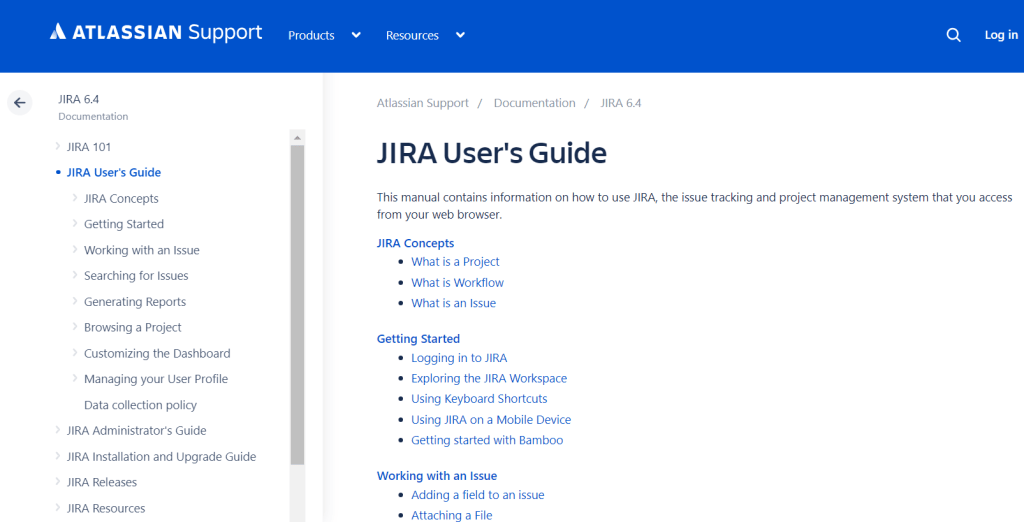
Screenshot source: https://confluence.atlassian.com/jira064/jira-user-s-guide-720416011.html
Here is an example of a good user manual from Jira software. It starts by briefing basic concepts and gradually guides the user to advanced use cases, such as customizing dashboards.
SOPs (Standard Operating Procedures)
SOPs are created for use by the internal staff to ensure consistent practices. By prescribing the “what,” “why,” and “how” of a task, SOPs consistently result in meeting quality standards.
Following SOPs helps to reduce errors and reworks, simplifies onboarding and training, increases productivity, enables knowledge transfer within the organization, and uplifts employee morale.
SOPs usually employ the following structure, which might vary slightly based on their nature:
- Title
- Table of contents
- Purpose
- Definitions
- Roles and responsibilities
- Materials and equipment
- Procedure (Actual SOP)
- References
- Revision history
Check out this blog from Indeed where they have jotted down eight SOPs used across various industries. By studying these examples, you can choose and design the perfect one for your requirements.
API Documentation
An API (Application Programming Interface) is an intermediary platform that allows data communication and exchange between different software applications.
API documentation provides instructions for using and integrating with the API. It also provides code examples, tutorials, and other details on how to integrate software with an API.
A good API Documentation constitutes the following sections:
- Overview of API defining the purpose and its potential benefits
- Endpoint details
- Parameter and data types
- Authentication methods
- Response format
- Status and error codes
- Examples and use cases
- Changelogs
Take a look at the outstanding API documentation by Twilio. Their documentation prioritizes developers and offers all the information they need for a smooth integration workflow.
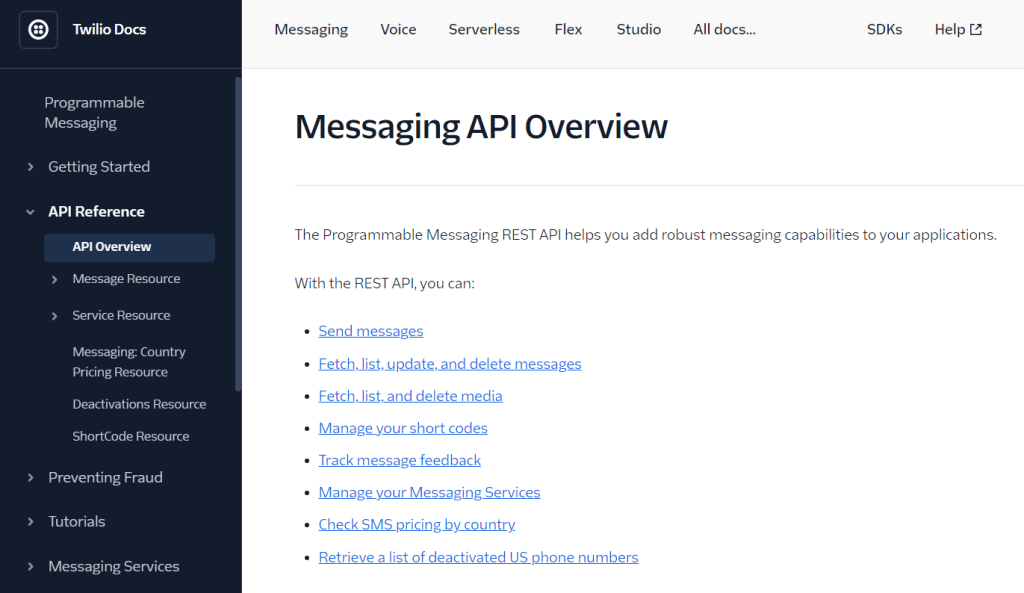
Screenshot source: https://www.twilio.com/docs/messaging/api
Many API documentations, today also offer interactive testing environment where developers can try and test the API requests within the documentation itself. They can see the live response of their requests without having to move to their development environment.
Technical Reports
A technical report is a formal communication of a project’s outcomes and offers recommendations for future actions. It effectively communicates technical information by consolidating all project-related data and serves as proof of the project’s progress.
Technical reports are submitted to the sponsor/management for review to support decision-making processes. Because of the comprehensive nature of information, technical reports help in a deeper understanding of the technical aspects and promote critical thinking and problem-solving skills.
Following list suggests a general structure of a technical report:
- Title page
- Summary
- Table of Contents
- Introduction
- Methodology
- Results and analysis
- Discussion
- Conclusion
- References
- Acknowledgment
- Appendices
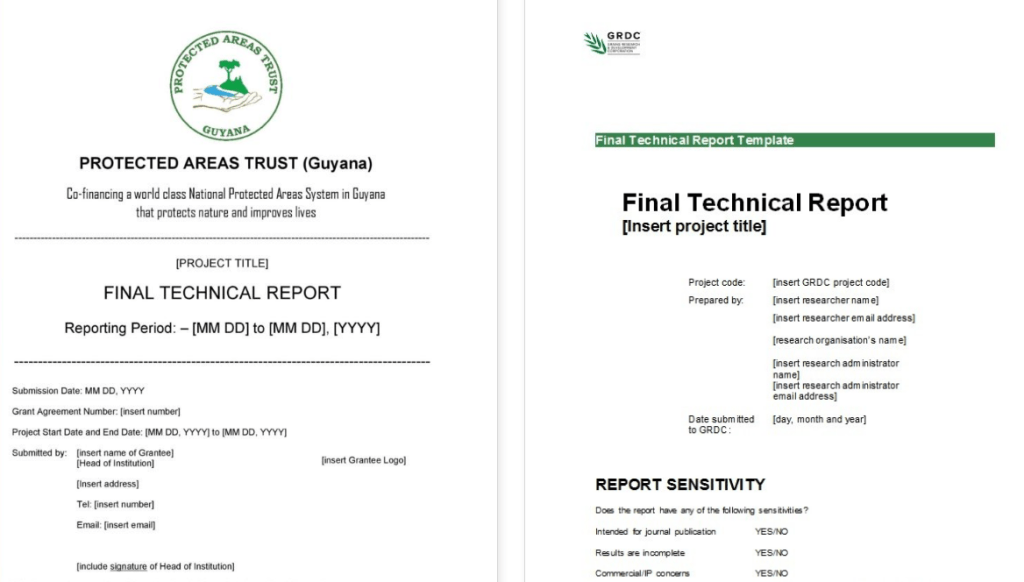
Screenshot source: https://templatelab.com/technical-reports/
This extensive collection of technical report examples and formats collated by TemplateLab can be a great reference, if you are planning to create a technical report.
Research Papers
Research papers are formal ways of communicating the findings of an original research work within a specific field. They contribute to new knowledge in a specific field of study, advance scientific understanding or solve a research question, and establish the credibility of the researcher(s) within the scientific community.
Publishing research papers in scientific journals follows a peer-review process. Experts in the field evaluate the arguments, methodology, data analysis, and conclusions, ensuring the research is sound and adheres to scientific standards. This process helps maintain the integrity and credibility of research findings.
Research paper structure can vary slightly depending on the target journal’s requirements. Generally, they have the following sections:
- Abstract
- Introduction
- Literature review
- Methodology
- Discussion
- Conclusion
- References
The visual elements in research papers often are diverse and complex. They may include graphs, charts, images, diagrams, chemical structures, maps, and more.
Here is an example of a research paper from Sage Journals, summarizing recent developments in various unconventional cancer therapies. It starts by introducing the current scenario of cancer as a global health crisis and then progresses to a literature review on different cancer treatments. After conveying the conclusion, the paper closes with a list of references.
Persuasive Technical Writing
Case Studies
Case studies are detailed examinations of a particular subject, situation, or event with the intent to answer the why and how behind an event. They are commonly used in businesses, medicine, and education fields.
Case studies stimulate discussion and sharpen decision-making skills. They also contribute as an inexpensive way of demonstrating expertise and improving client confidence in the brand. Hence, organizations usually employ case studies as an effective marketing methodology to increase leads and sales.
An effective case study report uses the following flow for a great impact:
- Executive summary
- Background
- Case Evaluation
- Proposed solution and implementation
- Result/Impact
Check out this example of a Figma case study, which highlights Figma’s impact on a customer’s team’s performance and overall product quality.
White Papers
White papers are in-depth analyses of a topic, mainly highlighting the problem and suggesting a solution to it. They educate readers about a given subject and establish the company’s image as an expert solution provider in their domain. Finally, they influence the decisions of potential clients (target audience) to invest in a company’s solutions, leading to higher sales.
A white paper’s content is backed by extensive research and data and includes visual elements like graphs, charts, and more. Organizations may choose to publish white papers when launching a new product or service or to address a specific challenge in a field. This helps build credibility and trust in the organization’s products or services.
A white paper has the following structure:
- Title Page
- Executive summary
- Introduction
- Problem statement
- Solution
- Conclusion
This article from Influencer Marketing Hub is a ready reference. The page lists a collection of whitepapers from renowned organizations and shares some practical tips about creating them.
Press Release
Press releases, also called news releases, press statements, or media releases, are intended to communicate the latest news about an organization. Organizations may issue press releases for crisis management, new product launches, mergers and acquisitions, events, awards, and other newsworthy occasions.
Press releases increase exposure and brand awareness and are a cost-effective marketing strategy. This also keeps stakeholders and consumers informed.
The structure of a press release has the following sections.
- Press release heading- contact information, date of press release, immediate release
- A headline
- Business Location
- 3- 4 paragraphs
- A short bio of the company/ contact info

Screenshot source: https://www.biocon.com/biocon-is-the-first-generics-company-to-obtain-approval-for-diabetes-drug-liraglutide-in-the-u-k/
Here is an example of a press release to share achievements. It is direct, clear, and contains essential information that completes it.
Business Plans
Business plans outline the goals and strategies of a new business or expansion of the scope of an existing business. This involves a deep understanding and presentation of the technical details of a business plan. The technical details ensure clear communication, enabling investors and lenders to make well-informed decisions.
Business plans include financial projections, market research data, and resource allocation.
A business plan writing has the following structure:
- Executive summary
- Company description
- Products and services
- Market analysis
- Marketing strategies
- Management plans
- Financial plans and projections
- Appendix
Bplans presents an extensive collection of business plans for various industries on its website. One of them is this agri-tourism business plan which is a good example to familiarize yourself with the structure of a business plan. The language is simple, and the information is to the point and well-organized.
Conclusion
This diversity in technical writing types reflects the potential of effective technical communication and its benefits. While these types differ in structure and content, they all practice the principle of clear and concise communication of complex technical information. Hence, editing and polishing each type is equally vital for effectively achieving its purpose.
Master the essential elements of technical communication with us to get the most out of your technical content.


 JSK Writes
Leave a comment